
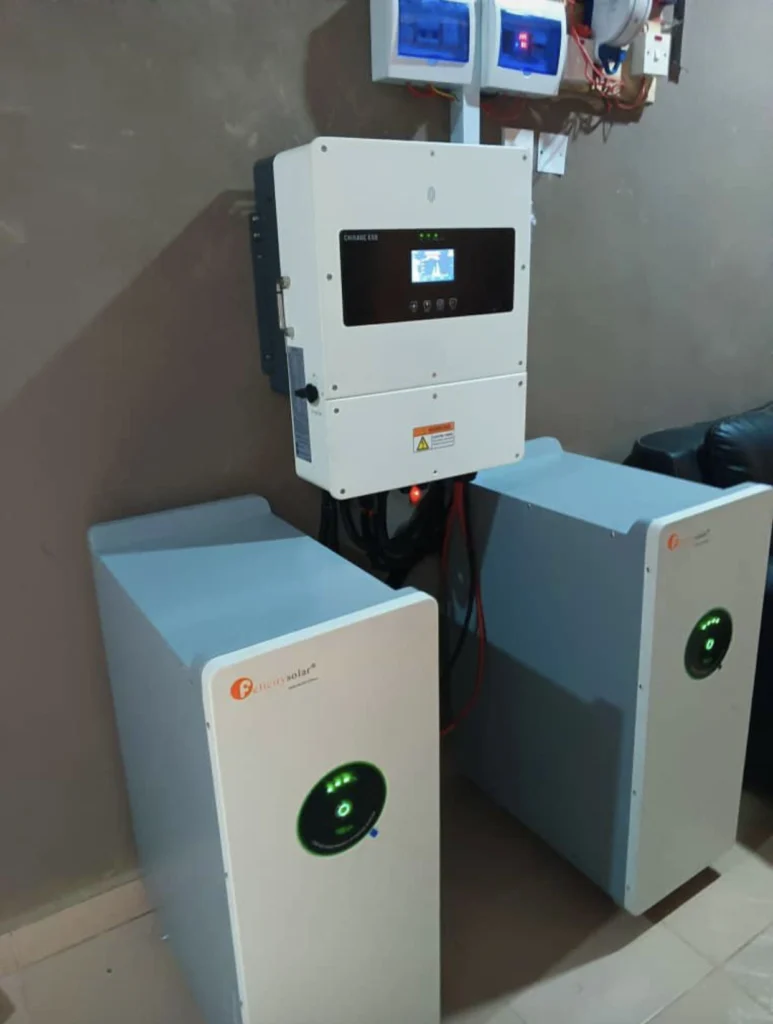
One of the most common questions people ask when installing a solar power system is:
How long does it take to charge a solar battery?
The answer depends on several factors.
A small battery with a large solar array may charge relatively quickly, while a large battery with fewer solar panels may take much longer.
The charging time of a solar battery depends mainly on:
- Battery capacity
- Solar panel capacity
- Available sunlight
- Battery charging specifications
- Electricity being used while charging
- Inverter and charge controller efficiency
- Weather conditions
Let’s look at these factors in more detail.
1. Battery Capacity
The size of your battery is one of the most important factors affecting charging time.
Battery capacity is commonly measured in:
Kilowatt-hours (kWh)
For example:
- 5kWh battery
- 10kWh battery
- 15kWh battery
A larger battery generally requires more energy to charge.
For example, a 10kWh battery requires more energy to charge than a 5kWh battery, assuming both batteries are at similar levels of discharge.
However, battery capacity alone does not determine charging time.
You also need to consider how much power is available for charging.
2. Solar Panel Capacity
The size of your solar array also plays a major role.
For example:
- 3kW solar array
- 5kW solar array
- 6kW solar array
- 10kW solar array
A larger solar array can potentially generate more electricity for charging the battery.
However, solar panels do not always produce their maximum rated power.
For example, a 5kW solar array does not necessarily produce exactly 5kW throughout the entire day.
Solar production changes depending on sunlight conditions.
3. How Much Sunlight Is Available?
Solar panels generate the most electricity when they receive strong sunlight.
Production can be affected by:
- Time of day
- Cloud cover
- Rain
- Panel orientation
- Shading
- Temperature
- Dirt on the panels
This means your battery may charge faster on a bright sunny day than on a cloudy day.
In Nigeria, solar production is generally strongest during the middle of the day when sunlight is more intense.
4. Your Home Is Using Power While the Battery Charges
This is one of the most important things to understand.
The electricity generated by your solar panels may be used for two things:
- Powering your appliances
- Charging your battery
For example, imagine your solar panels are producing 4kW of power.
If your home is currently using 1.5kW, the remaining available power may be used to charge the battery.
However, if your appliances are using 3.5kW, much less solar power will be available for battery charging.
This means your battery may charge faster when your household electricity consumption is low.
5. Battery Charging Power
Every battery has a recommended or maximum charging rate.
The battery management system and inverter may limit how much power can be sent to the battery.
For example, even if you have a large solar array, the battery may have a maximum charging current or charging power.
This is why adding more solar panels does not always mean the battery will charge faster.
The entire system must be properly matched.
A Simple Example
Let’s assume you have:
- A 10kWh lithium battery
- A solar array producing approximately 5kW under good conditions
- Household appliances consuming approximately 1kW
In this example, approximately 4kW may be available for charging the battery.
If the battery needs around 8kWh of energy to reach full capacity, a simplified estimate would be:
8kWh ÷ 4kW = approximately 2 hours
However, this is only a simplified example.
Actual charging time can be affected by:
- Charging losses
- Changes in solar production
- Battery charging limits
- Appliance consumption
- Battery charging behaviour
The battery may also charge more slowly as it approaches full capacity.
Why Batteries May Charge Slowly Near Full Capacity
Lithium batteries do not always charge at the same rate from empty to full.
The battery management system may reduce charging power as the battery approaches full capacity.
This helps protect the battery and manage the charging process safely.
Therefore, the final part of the charging process may sometimes take longer.
Can Solar Charge a Battery While Powering Appliances?
Yes.
A properly designed solar system can use solar power to:
- Run household appliances
- Charge the battery
- Supply other connected loads
The system automatically manages available power based on its configuration.
However, if your appliances are consuming a large amount of electricity, less solar energy may be available for charging the battery.
Does a Bigger Solar System Charge Batteries Faster?
Potentially, yes—but only when the rest of the system supports it.
A larger solar array can generate more electricity.
However, you also need to consider:
- Maximum PV input of the inverter
- MPPT specifications
- Maximum battery charging current
- Battery charging limits
- Cable size and system protection
The system should always be designed within the manufacturer’s specifications.
Can a Generator Charge a Solar Battery?
Many hybrid inverter systems can charge batteries using a generator.
This can be useful during:
- Extended periods of poor weather
- High electricity consumption
- Low battery levels
- Emergency situations
However, charging the battery with a generator requires fuel and increases running costs.
One of the advantages of solar is that sunlight can recharge the battery without continuously purchasing fuel.
How Can You Help Your Solar Battery Charge Faster?
There are several ways to improve battery charging performance.
Use the Right Number of Solar Panels
Your solar array should be properly sized for your energy requirements and battery capacity.
Too few solar panels may result in slow battery charging.
Reduce Daytime Electricity Consumption
Running fewer heavy appliances during the charging period can leave more solar power available for the battery.
Keep Solar Panels Clean
Dust and dirt can reduce the amount of sunlight reaching your solar panels.
Regular cleaning and maintenance can help maintain performance.
Avoid Shading
Even partial shading can significantly affect solar panel production, depending on the panel configuration.
Make sure your panels are installed in a location with minimal shading.
Use Quality Equipment
A properly designed system with compatible solar panels, inverter and battery can provide more reliable charging performance.
How Do I Know When My Battery Is Fully Charged?
Most modern lithium batteries and hybrid inverters display information such as:
- Battery percentage
- Battery voltage
- Charging status
- Charging power
- Battery current
Some systems also allow monitoring through a mobile application.
However, battery percentage and voltage readings should always be interpreted according to the battery manufacturer’s specifications.
Is It Bad to Charge a Lithium Battery Every Day?
No. Solar batteries are designed to be charged and discharged as part of normal operation.
However, proper system configuration is important.
The battery should be charged within the manufacturer’s recommended voltage, current and temperature limits.
A correctly configured inverter and battery management system can help protect the battery during normal charging and discharging.
Final Thoughts
There is no single answer to the question:
“How long does it take to charge a solar battery?”
The charging time depends on the battery capacity, solar panel size, available sunlight and how much electricity your home is consuming while charging.
A properly designed solar system should balance:
Solar Panels → Inverter/Charge Controller → Battery → Household Loads
If your battery is taking longer than expected to charge, the cause could be related to solar production, electricity consumption, battery capacity or system configuration.
Understanding how these components work together can help you get better performance from your solar system.
Need Help Designing Your Solar System?
At Gotech Solar, we design, supply and install solar power systems for homes and businesses.
Contact Gotech Solar today for a solar assessment and quote.
Frequently Asked Questions
How long does it take to charge a 10kWh solar battery?
The charging time depends on the available charging power, battery level, solar panel capacity and household electricity consumption. Under strong solar conditions, a properly sized system may charge it within several hours.
Can a solar battery charge while appliances are running?
Yes. Solar power can be used to run appliances and charge the battery at the same time, depending on available solar production and system configuration.
Why is my solar battery charging slowly?
Possible reasons include low sunlight, cloudy weather, heavy household electricity consumption, insufficient solar panels, shading or charging limits set by the battery or inverter.
Does cloudy weather stop solar batteries from charging?
No. Solar panels can still generate electricity on cloudy days, but production is usually lower than during strong sunlight.
Can I add more solar panels to charge my battery faster?
Possibly, but you must first check the maximum PV input and electrical specifications of your inverter or charge controller. The battery’s maximum charging rate must also be considered.