
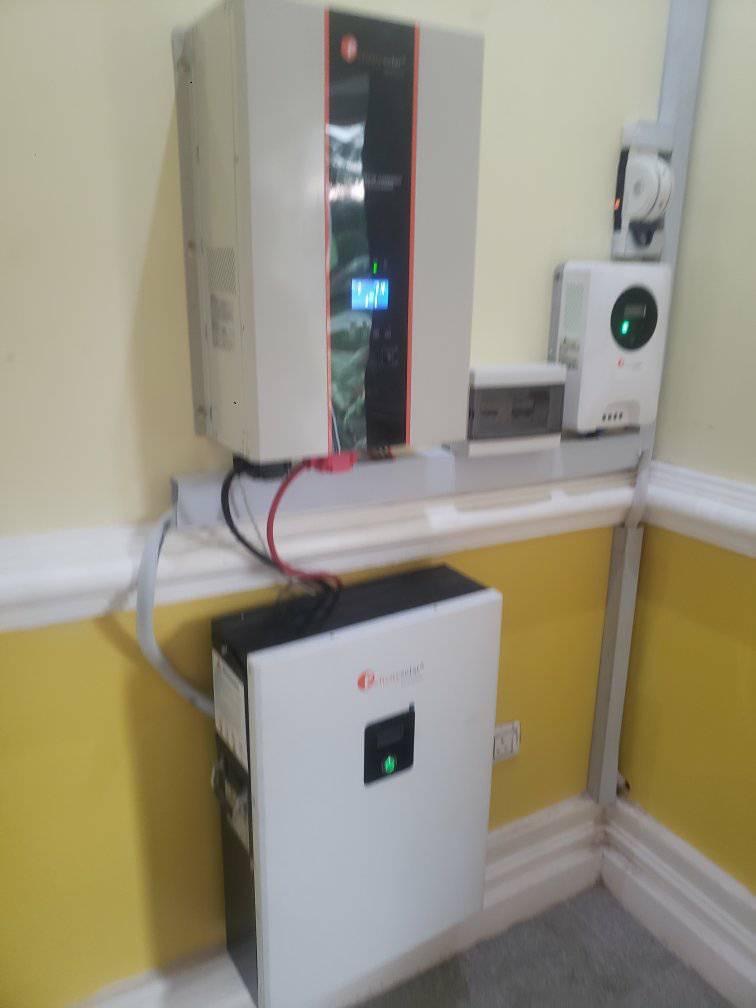
Have you noticed that your solar battery is not charging fully, even when there is plenty of sunlight?
For example, your battery may stop charging at 80%, 90%, or another level instead of reaching its expected charge level. In some cases, the battery may appear to charge normally during the day but discharge much faster than expected at night.
This can happen for several reasons, including insufficient solar power, high electricity consumption, battery settings, inverter configuration, wiring problems, or the battery’s own protection system.
Here are some of the most common causes and what you should check.
1. Your Solar Panels Are Not Producing Enough Power
One of the first things to check is the actual power coming from your solar panels.
Even if you have a large number of panels installed, their output can be reduced by:
- Cloudy weather
- Heavy rain
- Dirt or dust on the panels
- Partial shading
- Incorrect panel orientation
- Poor connections
- Damaged panels
- Incorrect panel configuration
For example, if your battery requires significant charging power but your solar array is producing only a small amount of power, the battery may take a long time to charge or may never reach full charge before the sun goes down.
2. Your Loads Are Using the Solar Power
Another common reason is that the solar system is charging the battery while your appliances are consuming much of the available power.
Imagine a system producing 4 kW from the solar panels while the house is simultaneously using 3 kW.
Only about 1 kW is available for charging the battery, before considering system losses and other limitations.
This is why a battery may appear to charge very slowly during the day.
High loads such as:
- Air conditioners
- Refrigerators
- Freezers
- Water pumps
- Electric cookers
- Water heaters
- Washing machines
can significantly reduce the power available for battery charging.
3. The Inverter’s Charging Settings May Be Incorrect
Your inverter controls how the battery is charged.
Depending on the inverter and battery combination, settings may determine:
- Maximum charging current
- Battery charging voltage
- Charging priority
- Battery type
- Low-voltage protection
- Maximum state of charge
- Solar charging limits
If these settings are incorrect, the battery may stop charging earlier than expected.
This is particularly important when configuring lithium batteries because the recommended charging parameters can vary between battery manufacturers and models.
Always use the battery manufacturer’s recommended settings rather than guessing the values.
4. The Battery May Have a Built-In Protection System
Lithium batteries normally have a Battery Management System (BMS).
The BMS monitors and protects the battery against conditions such as:
- Overcharging
- Excessive discharge
- High temperature
- Low temperature
- Excessive current
- Cell imbalance
If the BMS determines that a protection limit has been reached, it can restrict or stop charging.
This does not necessarily mean that the battery is faulty.
The battery display, inverter communication and manufacturer’s documentation should be checked to determine whether a protection condition is active.
5. Battery Communication May Not Be Working Properly
Some lithium batteries communicate with compatible inverters through communication ports such as CAN or RS485.
This communication allows the battery to provide information such as:
- State of charge
- Battery voltage
- Charging limits
- Discharging limits
- Temperature
- Protection status
If communication is required but the cable, protocol or inverter settings are incorrect, the inverter may not receive the correct information from the battery.
This can result in charging behavior that appears abnormal.
If your system uses battery-to-inverter communication, check that the correct communication protocol and connection are being used.
6. The Battery Is Already Near Its Maximum Charge Level
Sometimes the battery is charging correctly but appears to stop before reaching 100%.
This can be normal depending on the battery and inverter settings.
For example, an inverter may be configured to stop charging at a particular voltage or state-of-charge level instead of continuously charging the battery to 100%.
Some systems also reduce charging current as the battery approaches full charge.
Therefore, a battery charging at a lower current near the top of its charge range does not automatically indicate a problem.
7. Your Solar Charge Controller Has a Charging Limit
The MPPT charge controller or the inverter’s built-in MPPT may have a maximum charging-current or power limit.
For example, adding more solar panels does not always mean the battery will charge proportionally faster.
If the charge controller has already reached its maximum allowable charging power, additional available solar power may not increase the battery charging rate.
The solar array, MPPT capacity, battery voltage and maximum charging current should therefore be considered together when designing a system.
8. Poor Wiring or Loose Connections
Electrical connections can also affect battery charging.
Problems may include:
- Loose battery terminals
- Undersized cables
- Damaged cables
- Poor crimping
- Corroded terminals
- Poor DC connections
- Incorrect cable polarity
A poor connection can cause voltage drop and reduce the effective charging performance of the system.
Battery and DC connections should be inspected by a qualified technician, especially when dealing with high-current systems.
9. The Battery May Be Out of Balance
Lithium batteries contain multiple cells.
The battery’s BMS monitors the voltage of these cells and may reduce or stop charging if one cell reaches its limit before the others.
This can make the battery appear to stop charging early.
Cell imbalance can have several possible causes, and the correct solution depends on the battery design and manufacturer’s specifications.
If the battery repeatedly stops charging at an unusually low state of charge, its battery information and BMS status should be checked.
10. The Battery May Have Degraded
Battery capacity decreases over time.
If an older battery no longer holds as much energy as it did when it was new, you may notice changes in its charging and discharging behavior.
However, reduced battery capacity should not be assumed simply because the battery does not display 100%.
A proper assessment should consider:
- Battery age
- Number of charge cycles
- Actual battery voltage
- State of charge
- Charging current
- Discharging current
- Battery temperature
- BMS information
How to Troubleshoot a Solar Battery That Is Not Charging Fully
If your battery is not reaching its expected charge level, start with these checks:
Step 1: Check the solar production
Look at the inverter display or monitoring application and check how much power the solar panels are producing.
Step 2: Check your current loads
See how much power your appliances are consuming while the battery is charging.
Step 3: Check the battery state of charge
Compare the battery’s displayed state of charge with its voltage and other available battery information.
Step 4: Check inverter settings
Confirm that the battery type, charging voltage and maximum charging current are configured according to the battery manufacturer’s recommendations.
Step 5: Check battery communication
If your lithium battery is designed to communicate with the inverter, check the communication cable, protocol and settings.
Step 6: Inspect the wiring
Check for loose, damaged or undersized cables and poor connections.
Step 7: Check for battery alarms
Look at the battery and inverter displays for protection warnings, fault codes or abnormal temperatures.
Step 8: Get professional testing if the problem continues
If the system still does not charge properly after these checks, the battery, inverter, MPPT or solar array may need further testing.
Avoid changing charging parameters randomly, especially on lithium battery systems.
Does a Solar Battery Need to Reach 100% Every Day?
Not necessarily.
Whether a battery should reach 100% every day depends on the battery technology, manufacturer’s recommendations, inverter settings and how the system is designed.
For some systems, reaching a high state of charge regularly may be desirable. For others, the system may intentionally operate within a particular state-of-charge range.
The important thing is that the battery operates within the manufacturer’s recommended limits.
When Should You Call a Solar Technician?
You should consider professional inspection if:
- The battery consistently stops charging at an unusually low level
- The inverter shows battery or charging faults
- The battery repeatedly enters protection mode
- Battery communication keeps disconnecting
- The battery becomes unusually hot
- Charging current appears abnormal
- The battery voltage behaves unexpectedly
- The system previously charged normally but suddenly changed
Do not open or attempt to repair the internal electronics of a battery or inverter unless you are specifically qualified and authorized to do so.
Final Thoughts
A solar battery that is not charging fully does not automatically mean that the battery is bad.
The problem could be caused by insufficient solar production, high loads, inverter settings, charging limits, communication problems, wiring, battery protection or battery condition.
The best approach is to check the solar input, current load, inverter settings and battery information before replacing any equipment.
If the problem continues, a qualified solar technician can test the system and identify the actual cause.
Looking for a reliable solar system for your home or business?
Gotech Solar provides solar system design, supply, installation and maintenance for homes, businesses and organizations.
Frequently Asked Questions
Why is my solar battery stuck at 80%?
Your inverter may be configured with a charging limit, or the battery’s BMS may be restricting charging. Insufficient solar power, high loads or incorrect charging settings can also contribute.
Why does my battery charge slowly during the day?
Your appliances may be consuming much of the available solar power. Cloudy weather, shading, dirty panels, insufficient PV capacity or charging limits can also reduce the charging rate.
Can a bad solar panel stop my battery from charging fully?
Yes. A damaged panel or a problem with the solar array can reduce available charging power. However, other parts of the system should also be checked before concluding that a panel is faulty.
Can an inverter stop a battery from charging at 100%?
Yes. The inverter’s charging settings and battery communication can determine when charging current is reduced or stopped. The correct settings depend on the specific battery and inverter.
Is it normal for a lithium battery to stop charging before 100%?
It can be, depending on the battery, inverter configuration and charging strategy. Check the manufacturer’s recommended operating and charging parameters before making changes.
Should I replace my battery if it is not charging fully?
Not immediately. First determine whether the problem is caused by solar production, loads, inverter settings, wiring, communication, battery protection or actual battery degradation.